Recent Meta Layoffs and What This Could Mean for the Global XR Industry
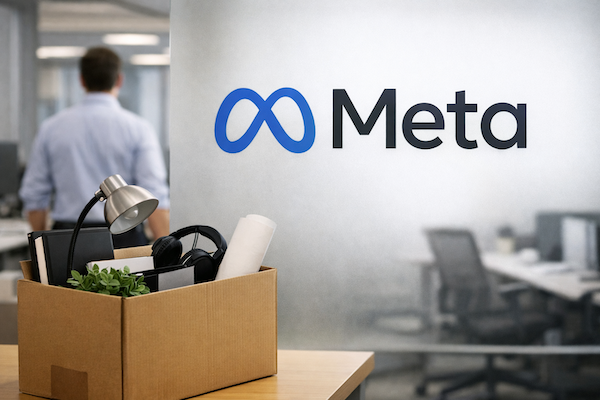
Like many people working in Extended Reality (XR) I was thrown by the recent news that Meta has laid off roughly 10% of staff, about 1,500 people, from its Reality Labs division. I feel for all the talented people who have lost their jobs especially at the start of a new year. A number of people, both within and outside of the XR industry have reached out to ask about my thoughts.
First, The Official News
Meta has laid off roughly 10% of staff (about 1,500 people) from its Reality Labs division. Which is responsible for Quest headsets, Horizon software, smart glasses as well as R&D into future technologies such as Codec Avatars and augmented really glasses.
In terms of gaming, Meta has shut down three of its VR studios (Twisted Pixel, Armature & Sanzaru Games), conducted several layoffs at a fourth studio and cancelled the Batman: Arkham Shadow sequel.
Meta also announced the shutdown of Horizon Workrooms (a VR collaboration platform that allowed teams to work together in immersive spaces using VR headsets or web browsers) and its Quest for Business Program.
Officially Meta has said that they are shifting their investment from Metaverse toward AI glasses and wearables.
But what do I think this means for the XR industry as a whole?
AI and Wearables Are Critical Components For Future XR Development
The Reality Labs division that works on augmented reality is expected to be largely spared from the cuts. They are responsible for Meta’s Ray-Ban sunglasses (which have sold more than two million units over the past few years) and the Ray-Ban Display smart glasses announced last year which include a digital display and user interface via a hardware wristband.
It’s important to note that these smart glasses (incorporating a camera, microphone, computer vision, digital displays, and AI assistants) are the precursor to a new kind of user experience markedly different from the bulky headsets of today.
·Glasses are mobile.
You can wear them outside.
They are lightweight and ergonomic – you can wear them all day.
They are more socially acceptable.
Meta (and other tech companies working in XR) are exploring a two-pronged approach when it comes to XR, making investments at both ends of the hardware spectrum: lightweight glasses on one end and full headsets with more powerful computing power on the other.
When smart glasses have more XR functionality, intuitive user inputs (hand, gaze and head tracking), wider FOV displays and more powerful onboard computing, users will be able to interact with more dynamic 3D content, location based content and even each other.
This is the holy grail of XR content – think of the Free Guy movie and being able to walk through the “real” physical world while accessing multiple layers of different content or “multiverses”.
A Shift Towards Growing Users Through Social Multiplayer Experiences
Although Horizon Worlds does not appear to be impacted (for now) there has been a concerted effort by Meta to make these experiences accessible beyond VR headsets and available on mobile platforms. It’s a strategy that makes sense if you’re trying to grow your user base rapidly – more people own computers and mobile phones than VR headsets.
Meta CTO Andrew Bosworth said recently, “We're seeing tremendous growth of our metaverse on mobile. You know, horizon is this thing that started on VR headsets. But obviously there's much more users today on mobile phones. We've been pivoting over the last year to focus on the mobile market and it's going really well.”
The main competitors for Meta’s multiverse dream are not other VR platforms but actually social and multi-player social platforms like Roblox and Fortnite, which are extremely popular with a coveted younger audience. Meta’s current social platforms (Facebook, Instagram, Whatsapp and Messenger) have aging demographics and Meta needs to attract younger Millennials and Generation Alpha for future growth.
Meta Is Just One Company
Although they like to be front and centre in the conversation about the metaverse, Meta are not the only company making significant investments in XR hardware, software, applications and experiences.
Google has been working steadily on XR hardware and software for over a decade, announcing last year Android XR, an AI-powered operating system for headsets and glasses. Along with Gemini, its powerful AI assistant, Google has focused on XR software allowing partners like Samsung Galaxy XR glasses for hardware.
Apple launched Visio Pro in 2023 and has been making incremental improvements to Vision OS. Interestingly it has incorporated liquid display UI into mobile devices (perhaps signalling that they are moving towards a future of transparent displays?).
HTC Vive has a suite of XR hardware including high performance VR, mixed reality, and augmented reality glasses and has worked hard to court enterprise customers and pro gamers looking for high end experiences.
Last year Steam announced their standalone VR headset called Steam Frame complimenting the host of VR titles already available on the Steam platform.
ByteDance, developer of the PICO XR headset, is making steady progress with affordable headsets
And there are other companies with XR products including Sony with PlayStation VR, XReal, Varjo VR-3 and XR-4, PICO, Magic Leap, Lenovo VRX and more.
What Might The Future Hold?
Although it may appear that Meta is taking a sidestep away from VR, I believe they are still playing the long game and working towards a metaverse future.
XR offers users the opportunity to live and breathe within magical worlds. Creators like myself, want to see that they are supported and encouraged to continue experimenting, developing and publishing XR experiences. The current mood may be sombre but there is an opportunity for other companies to take advantage of this temporary void and make investments in the XR developer and creative ecosystem to create the next generation of interactive experiences. “Build it and they will come.”